
- Home
-
Shop
-
Fudge
-
Experiences
-
About/Visit
- The Chocology Journal
-
 + A Limited Time Special Offer
We're less than a month away from Valentine's Day - the traditional chocolate holiday! We are so excited that this special day is near. What a wonderful time to express love and gratitude to those special people in our lives.
At Chocology, we realize it’s not always easy to choose a gift that truly says, “I love you”. That’s why we have created a most delectable array of chocolates just for Valentines Day. Your Valentine will feel extra special when they receive our Love & Kisses collection. Designed to perfection, our creamy homemade fudge and couture truffles are as delicious as they are pretty, each an individual gift of its own.
All of our chocolates are hand packed with the greatest of tender loving care and made with the freshest ingredients available. Our “How to Eat Chocolate Mindfully” card accompanies each and every order. You can rest assured that your Valentine will savor each chocolate and thank you with every bite.
Last week, we took a poll asking you, our readers, what kind of chocolate you hoped to find in your Valentine box this year. The votes are in! Dark Chocolate Hearts were voted the most desired chocolate for Valentines Day 2015. Look below for a sneak peek at the truly decadent Valentines collection Chocology has to offer for the Valentine’s 2015 season.
All of our Love & Kisses chocolates are tenderly filled with dark chocolate ganache, rich creamy salted caramel and oh so much more. Our romantic heart-shaped fudge will be available for a limited time as well.
As an expression of our love and gratitude, we at Chocology would like to extend a special offer to you ~ our loyal followers. For a limited time, we are offering 20% off your entire *Chocology Valentine order. This offer will run through midnight, Wednesday January 21. In addition, all orders over $75 will receive **free standard shipping.
We hope that this offer will assist you in creating a Valentines Day to remember. Our mission at Chocology is to provide excellent service and products while building strong relationships with our customers.
Here’s your sneak peek of our Love & Kisses Valentine Collection:

Cherish--Dark Chocolate Ganache in a Dark Chocolate shell. 62% Dark chocolate ganache
 Sweet Love--Creamy white chocolate ganache with the pure and gentle taste of fresh picked raspberries wrapped in a White Chocolate Shell.
 Adore--Strawberry Champagne Ganache in a Dark Chocolate Shell. Balancing sweet strawberries, champagne and almond paste in a dark chocolate shell

My delight--Salted Caramel in a Milk Chocolate Shell, filled with a rich harmonious blend of buttery caramel with the unexpected boldness of fleur de sel.
And don't forget our fabulous fudge:

Fat-Ass Fudge Hearts: You can taste the delectable pleasure and pure ingredients in every bite. Our heavenly, handmade fudge is rich, delicious, and completely natural. It is made with Belgian chocolate, organic goat's milk and goat's butter and love; gluten and lactose free.
Your Coupon Code:
Loyal Followers Coupon (coupon code: Love&Kisses)
Expires Wednesday at midnight
We look forward to helping you create a wonderful Valentines Day for your special someone. Please feel free to share this offer with your friends and family on Facebook or Twitter, so that everyone has the opportunity to take advantage of this wonderful pre-Valentines Day special.
*To insure the freshest chocolates, your order will arrive in the days just before Valentines Day.
** free shipping to one destination on orders over $75.
Be sure to visit our website soon and make your gift purchases.

Gratitude ~ the quality of being thankful; readiness to show appreciation for and to return kindnessWe talk a lot about gratitude in the month of November. We all try to make an extra effort to count our blessings, do for others and pay closer attention to all that we have. It’s important to make this effort in every day life, and we’ve found at Chocology that it is especially important to practice gratitude in our day-to-day business dealings. Having a gratitude practice can paint a new picture on a chaotic day. Starting and running a business can bring challenges that aren’t expected at times. When we make it a point to shift our focus to what is working, rather that what is challenging, it feels as though we are swimming with the flow of life. By integrating an attitude of gratitude into our business practices, we make better decisions, even in the chaos of a challenging day. Focusing on gratitude grounds Chocology and keeps us zeroed in on giving. When we feel abundant, we feel as though we have lots to give. Our focus becomes about giving good service, good quality products and building strong relationships. We don’t have time to dwell on the things that don’t go our way, because we know that there is always another door up there on the horizon just waiting for us to walk through it. When we appreciate all of the good things that are happening, it seems to bring us even more. Chocology prides itself on making chocolate personal. Our vision is RED, putting our focus on Relationships, Education and Distinct products. All of these qualities arise from the gratitude we have for our customers and vendors. While the bottom line is important, when we put our focus on giving, the bottom line takes care of itself. We operate Chocology just as we operate our personal lives. We start our day with gratitude for our customers, our readers and all of our vendors and products. Our purpose is to bring great products and education to all that desire it and to appreciate every step we take to get there. We thought it might be nice to share some of the things that Chocology is very grateful for this month. We hope that it will inspire you to stop for a moment and think about what you are grateful for. Being thankful is the first step to creating a brand new day filled with all of our hearts desires. It really does begin with perspective. Let’s cultivate an attitude of gratitude together this month. Chocology is especially grateful for:
YOU our customers and readers
For the opportunity to share our love for all things chocolate
For all of our outstanding vendors, technical people and associates who help us make Chocology a company we are proud of
For our new Fat Ass Fudge products (We know you’re going to love them!)
For the potential to bring education to kids through Chocology Kids
For all of our pet friends out there and the opportunity to develop products that they will enjoy in the future
For all of our family and friends, who support us on this lovely chocolate adventure
We truly are thankful for the opportunity to share our passion with you. Thank you for being a part of our Chocology family. We wish you and yours a very happy Thanksgiving. We would love to hear what you are thankful for this month. Feel free to leave us a comment, visit us on Facebook or tweet us your gratitude list.The winner of the 24-piece “You Can Have it All” Chocology Chocolates, is Ted Cart. Thank you Ted for helping us spread the word about Chocology.
Winners of our Fudge giveaway are Candy Johnson, Nitsa Swain,Tricia Folliero, DanTeresa Loos, Wesi Tresi and Beda Nelson. Thank you all for participating in our contest and sharing your love of Chocology with your friends and family.
Thanks to everyone who participated in our give aways! Be sure to connect with us on Facebook and Twitter so that you will stay updated on all of the contests and specials we are having during the holidays. Have a terrific, chocolate filled week! ~ Linda Johnson Wow, Madeline and I have been learning a lot about chocolate lately!
In addition to all we are discovering in our chocolatier class, we are getting ready to make a big announcement on Sunday about our upcoming fudge line. We're also gearing up to participate in the upcoming Long Island Chocolate Festival! There’s a lot to learn and since we are a company based on the study of chocolate, this is a good thing!
We’re so excited about the knowledge we’ve acquired and naturally we love passing all of this new information on to you.
So, this week we decided to create a chocolate glossary, for all you chocolate lovers out there! Did you ever wonder what the difference was between a cocoa nib and a cocoa bean? Or maybe you thought that a cacao bean and a cocoa bean were the same thing. Have you ever been at the grocery store trying to decide between semi-sweet, bittersweet or milk chocolate chips but didn’t really understand the difference? What about tempering? What exactly is that and how is it done? Well, read on. You’re about to find answers to many of the questions you’ve always had about chocolate.
Wow, Madeline and I have been learning a lot about chocolate lately!
In addition to all we are discovering in our chocolatier class, we are getting ready to make a big announcement on Sunday about our upcoming fudge line. We're also gearing up to participate in the upcoming Long Island Chocolate Festival! There’s a lot to learn and since we are a company based on the study of chocolate, this is a good thing!
We’re so excited about the knowledge we’ve acquired and naturally we love passing all of this new information on to you.
So, this week we decided to create a chocolate glossary, for all you chocolate lovers out there! Did you ever wonder what the difference was between a cocoa nib and a cocoa bean? Or maybe you thought that a cacao bean and a cocoa bean were the same thing. Have you ever been at the grocery store trying to decide between semi-sweet, bittersweet or milk chocolate chips but didn’t really understand the difference? What about tempering? What exactly is that and how is it done? Well, read on. You’re about to find answers to many of the questions you’ve always had about chocolate.
Chocology Chocolate Glossary
 Halloween is so much fun. It signals the beginning of Fall festivities, cooler weather and the countdown to Thanksgiving and Christmas. Our kids get excited about dressing up and filling their pails with candy. It’s become such a popular holiday that Americans are estimated to spend a whopping $2.5 billion this season on Halloween candy alone!
Almost all of us celebrate to one extent or another, but have you ever wondered how Trick-or-Treating came to be? Disguising our children and allowing them to beg candy from strangers is, well, a little strange. Chocology wanted to know the history, so we went on a mission to find out how Trick-or-Treating on Halloween came to be.
Halloween came about as a celebration of All Hallows Eve (the day before All Saints Day), a Christian holiday in which the dead are remembered, particularly martyrs and saints. All Saints Day coincided with a Celtic celebration called Samhain (pronounced Sah-ween). For the Celts, Samhain was a time in which the spirits of the dead swept through the earth, mingling with living beings. Bonfires and sacrifices were made to keep the spirits moving on their journey to the otherworld and keep them away from the their tribes and animals. Samhain became the Halloween we celebrate today when Christian missionaries attempted to change the religious practices of the Celtic people. Rather than eradicate their pagan practices completely, Christian missionaries transformed Celtic ceremonies little by little to coincide with the Christian holiday of All Saints Day. Mingling Christian beliefs and customs with Celtic traditions helped the Celts to slowly convert to Christianity.
Trick-or Treating is actually a fairly new practice. Before the 1940’s All Hallows Eve was celebrated by holding small parties with cakes or fruit. It wasn’t until the late 1940’s that trick-or-treating was recognized throughout most of the U.S. and even then candy was not the treat of choice. In the 1940’s and early 1950’s, trick-or-treaters were more likely to receive homemade treats, coins, fruit or even little toys rather than candy. Today, Halloween is the candy industry’s most profitable holiday, falling behind Christmas, Easter and Thanksgiving.
In the 1960’s it was still fairly acceptable to hand out homemade treats. But in the 1970’s, fear of those homemade treats being tampered with or even poisoned, led people to feel that the store bought, individually wrapped candies were a safer option. As the number of children trick-or-treating swelled, the candy industry saw this as a perfect marketing opportunity to raise sales of their confections in the Fall. The marketing of small individually wrapped candies took off in the 1970’s and candy became the official “treat” for trick-or-treaters.
Despite the fact that Trick-or-Treating is a fairly recent phenomenon, it does resemble a medieval practice called “souling”. Poor folks would go door to door on November 1 (All Saints Day) offering prayers for the dead in exchange for food.
Although popular historical rumors explain that trick-or-treating was invented by adults as a plan to stifle youthful pranks on Halloween, there is no real documented evidence of this. In the late 1940’s, Jack and Jill magazine mentioned a fun game called trick-or-treating. After that, television shows portraying children trick-or-treating got national attention. For the most part, it was the children who had to explain the practice of trick-or-treating to bewildered adults. Many adults felt it was an act of extortion and did not approve. Despite the push back from some adults, however, trick-or-treating on Hallows Eve took hold and it slowly became the tradition that many of us enjoy each year.
It was so interesting researching all of the ancient traditions that led to our modern day Halloween celebrations. What are your customs for Halloween and All Saints Day? Do you have a special tradition or practice? Chocology would love to hear about it. Tell us what you are doing this holiday season or better yet, send us some pictures on Facebook, Instagram or Twitter.
Chocology wishes you a safe Halloween this year with lots of fun with friends and family! Happy Halloween!
Halloween is so much fun. It signals the beginning of Fall festivities, cooler weather and the countdown to Thanksgiving and Christmas. Our kids get excited about dressing up and filling their pails with candy. It’s become such a popular holiday that Americans are estimated to spend a whopping $2.5 billion this season on Halloween candy alone!
Almost all of us celebrate to one extent or another, but have you ever wondered how Trick-or-Treating came to be? Disguising our children and allowing them to beg candy from strangers is, well, a little strange. Chocology wanted to know the history, so we went on a mission to find out how Trick-or-Treating on Halloween came to be.
Halloween came about as a celebration of All Hallows Eve (the day before All Saints Day), a Christian holiday in which the dead are remembered, particularly martyrs and saints. All Saints Day coincided with a Celtic celebration called Samhain (pronounced Sah-ween). For the Celts, Samhain was a time in which the spirits of the dead swept through the earth, mingling with living beings. Bonfires and sacrifices were made to keep the spirits moving on their journey to the otherworld and keep them away from the their tribes and animals. Samhain became the Halloween we celebrate today when Christian missionaries attempted to change the religious practices of the Celtic people. Rather than eradicate their pagan practices completely, Christian missionaries transformed Celtic ceremonies little by little to coincide with the Christian holiday of All Saints Day. Mingling Christian beliefs and customs with Celtic traditions helped the Celts to slowly convert to Christianity.
Trick-or Treating is actually a fairly new practice. Before the 1940’s All Hallows Eve was celebrated by holding small parties with cakes or fruit. It wasn’t until the late 1940’s that trick-or-treating was recognized throughout most of the U.S. and even then candy was not the treat of choice. In the 1940’s and early 1950’s, trick-or-treaters were more likely to receive homemade treats, coins, fruit or even little toys rather than candy. Today, Halloween is the candy industry’s most profitable holiday, falling behind Christmas, Easter and Thanksgiving.
In the 1960’s it was still fairly acceptable to hand out homemade treats. But in the 1970’s, fear of those homemade treats being tampered with or even poisoned, led people to feel that the store bought, individually wrapped candies were a safer option. As the number of children trick-or-treating swelled, the candy industry saw this as a perfect marketing opportunity to raise sales of their confections in the Fall. The marketing of small individually wrapped candies took off in the 1970’s and candy became the official “treat” for trick-or-treaters.
Despite the fact that Trick-or-Treating is a fairly recent phenomenon, it does resemble a medieval practice called “souling”. Poor folks would go door to door on November 1 (All Saints Day) offering prayers for the dead in exchange for food.
Although popular historical rumors explain that trick-or-treating was invented by adults as a plan to stifle youthful pranks on Halloween, there is no real documented evidence of this. In the late 1940’s, Jack and Jill magazine mentioned a fun game called trick-or-treating. After that, television shows portraying children trick-or-treating got national attention. For the most part, it was the children who had to explain the practice of trick-or-treating to bewildered adults. Many adults felt it was an act of extortion and did not approve. Despite the push back from some adults, however, trick-or-treating on Hallows Eve took hold and it slowly became the tradition that many of us enjoy each year.
It was so interesting researching all of the ancient traditions that led to our modern day Halloween celebrations. What are your customs for Halloween and All Saints Day? Do you have a special tradition or practice? Chocology would love to hear about it. Tell us what you are doing this holiday season or better yet, send us some pictures on Facebook, Instagram or Twitter.
Chocology wishes you a safe Halloween this year with lots of fun with friends and family! Happy Halloween!
 What a wonderful week! I want to thank all of you who helped make my birthday so very special by sharing Chocology with your family and friends!
All the birthday wishes on Facebook, Twitter, private messages, Linkedin and Instagram made me smile too. Chocolate lovers are GREAT people!
Our Happy Birthday to Me contest was a big hit! Thank you ALL for participating. Chocology would like to congratulate Ted Cart for winning the 24-piece box of Chocology chocolates. And since we had so many entries, we've added a second prize. Gretchen Ting, you've won a Chocology Gift Certificate in the amount of $27.50. Thank you Ted and Gretchen for helping us spread the word. Be sure to contact me within 48 hours so that we can get you your prizes.
[caption id="attachment_512" align="aligncenter" width="300"]
What a wonderful week! I want to thank all of you who helped make my birthday so very special by sharing Chocology with your family and friends!
All the birthday wishes on Facebook, Twitter, private messages, Linkedin and Instagram made me smile too. Chocolate lovers are GREAT people!
Our Happy Birthday to Me contest was a big hit! Thank you ALL for participating. Chocology would like to congratulate Ted Cart for winning the 24-piece box of Chocology chocolates. And since we had so many entries, we've added a second prize. Gretchen Ting, you've won a Chocology Gift Certificate in the amount of $27.50. Thank you Ted and Gretchen for helping us spread the word. Be sure to contact me within 48 hours so that we can get you your prizes.
[caption id="attachment_512" align="aligncenter" width="300"] A Full Box of Decadence - From the 24-Piece Chocology Collection[/caption]
In keeping with all of the chocolate celebrations this month, we thought we would gift everyone with a couple of our favorite brownie recipes! The first is a grain-free low-sugar recipe that is to die for. Originally posted by PaleOMG, it is our go to recipe when we want something healthy and sweet.
[caption id="attachment_495" align="alignleft" width="300"]
A Full Box of Decadence - From the 24-Piece Chocology Collection[/caption]
In keeping with all of the chocolate celebrations this month, we thought we would gift everyone with a couple of our favorite brownie recipes! The first is a grain-free low-sugar recipe that is to die for. Originally posted by PaleOMG, it is our go to recipe when we want something healthy and sweet.
[caption id="attachment_495" align="alignleft" width="300"] SWEET POTATO BROWNIES[/caption]
1 sweet potato 3 eggs, whisked ¼ cup Coconut Oil, melted ⅓ cup raw honey ¼ teaspoon vanilla extract 3 tablespoons Coconut Flour 2 tablespoons unsweetened cocoa powder ¼ teaspoon baking powder ¼ teaspoon cinnamon pinch of salt ½ cup Chocolate Chips
Instructions:
Bake the sweet potato. Preheat your oven to 425 degrees, use a fork to puncture holes all around it, then throw in the oven for 25-30 minutes.
Once your sweet potato is soft and cooked through, peel off the skin and mash it up in a bowl. Turn your oven down to 350 degrees.
Add your wet ingredients: eggs, coconut oil, honey, and vanilla to the bowl and mix together.
Then add your dry ingredients: coconut flour, cocoa powder, baking powder, cinnamon, salt and chocolate chips.
Mix well.
Pour into an 8×8 glass baking dish.
Bake for 30-35 minutes.
Let rest to cool a bit.
If you’re looking for a decadent, super easy recipe for brownies, our favorite is right off the back of the Baker’s Unsweetened Chocolate box. One-bowl brownies are so simple to make; you can be eating this sweet treat within 40 minutes, start to finish! We substitute chocolate chips in place of nuts (of course we do, we LOVE chocolate). So, if you’re feeling a bit wicked, whip out your ONE bowl and make a batch of these. They’re sure to please all those chocoholics in your family! [caption id="attachment_496" align="alignleft" width="224"] ONE BOWL BROWNIES[/caption]
1 pkg. (4 oz.) BAKER'S Unsweetened Chocolate ¾ cup butter or margarine 2 cups sugar 3 eggs 1 tsp. vanilla 1 cup flour 1 Cup Chocolate Chips
Instructions:
HEAT oven to 350°F.
LINE 13x9-inch pan with foil, with ends of foil extending over sides. Spray foil with cooking spray.
MICROWAVE chocolate and butter in large microwaveable bowl on HIGH 2 min. or until butter is melted. Stir until chocolate is completely melted. Stir in sugar. Blend in eggs and vanilla. Add flour and chocolate chips; mix well. Pour into prepared pan.
BAKE 30 to 35 min. or until toothpick inserted in center comes out with fudgy crumbs. (Do not overbake.) Cool completely. Use foil handles to remove brownies from pan before cutting to serve.
If you try one of these recipes, please tell us about it. Did you make them both? Which was your favorite? Please share with us in the comments section here or on our Facebook Page or take a picture and send it to us on Instagram! We'd love to hear all about it. Thanks again to everyone who participated in our Happy Birthday to Me Give Away! Stay tuned for more contests in the near future. We appreciate your support! I love birthdays, don’t you? My birthday is October 8 and I would love to include my loyal readers and customers in the celebration! I have so much to be thankful for, and to show my gratitude, I want to do a big birthday giveaway!
I truly believe that I was meant to work in the Chocolate industry. No wonder I’m so passionate about chocolate--It seems to be a very chocolaty month... Did you know that Chocolate week is celebrated in the UK on October 13 through October 19? And there’s Chocolate Cupcake day on October 18 as well as The Chocolate Show – London October 17th through the 19th. And let’s not forget that Halloween is in October and full of chocolate goodness! AND – The National Chemistry Week’s theme this year is, yep, CANDY.
So with my birthday festivities, combined with all of this chocolate celebration, how would you like to win a 24-piece fresh box of delectable scrumptious chocolate from our Chocology collection? YOU could be our lucky birthday celebration winner!
Plus, we are extending a 15% discount on all of our chocolates this week (October 7 through October 14) to everyone! Don’t miss this opportunity to visit our website and get your discount.
Here’s how to be sure you’re entered to win:
You can enter as many times as you like. Each time you do one of the following, your name goes in the hat again.
I love birthdays, don’t you? My birthday is October 8 and I would love to include my loyal readers and customers in the celebration! I have so much to be thankful for, and to show my gratitude, I want to do a big birthday giveaway!
I truly believe that I was meant to work in the Chocolate industry. No wonder I’m so passionate about chocolate--It seems to be a very chocolaty month... Did you know that Chocolate week is celebrated in the UK on October 13 through October 19? And there’s Chocolate Cupcake day on October 18 as well as The Chocolate Show – London October 17th through the 19th. And let’s not forget that Halloween is in October and full of chocolate goodness! AND – The National Chemistry Week’s theme this year is, yep, CANDY.
So with my birthday festivities, combined with all of this chocolate celebration, how would you like to win a 24-piece fresh box of delectable scrumptious chocolate from our Chocology collection? YOU could be our lucky birthday celebration winner!
Plus, we are extending a 15% discount on all of our chocolates this week (October 7 through October 14) to everyone! Don’t miss this opportunity to visit our website and get your discount.
Here’s how to be sure you’re entered to win:
You can enter as many times as you like. Each time you do one of the following, your name goes in the hat again.
Be a subscriber to this blog, Chocology Today. Not a subscriber? It’s easy. Just type in your email address in that handy "follow" button to the right and you’re in! Subscribing to the blog puts your name in the hat one time!--Get one (1) point!
Share THIS blog with your friends--Get one (1) point!
Share THIS giveaway with your friends using the social media buttons at the bottom of this post--Get one (1) point!
LIKE this post and leave a comment--Get one (1) point!
Buy a box of chocolates on our website at chocologyunlimited.com Don’t forget, you get a 15% discount this week--Get two (2) points!
The more you share the better your chances of winning! Winner will be announced on the blog, October 14, 2014. You will have 48 hours to respond or a new winner will be chosen, so be sure to check our blog next week to see if YOU are the lucky winner! I’m so excited to be celebrating my birthday with all of YOU! Thank you for helping us spread the word. On your mark. . .Get set. . . Go! And, Good Luck! ~ Linda Johnson Everyone loves chocolate. This is evident in both movies and television. We thought it would be fun to relive some of our favorite scenes together in this weeks Chocology blog.
Disclaimer: These video clips may prompt uncontrollable cravings for chocolate!
One of the most famous (and hilarious) scenes of all time involving chocolate has to be the scene in the I Love Lucy series, where Lucy and Ethel get jobs in a chocolate factory.
Everyone loves chocolate. This is evident in both movies and television. We thought it would be fun to relive some of our favorite scenes together in this weeks Chocology blog.
Disclaimer: These video clips may prompt uncontrollable cravings for chocolate!
One of the most famous (and hilarious) scenes of all time involving chocolate has to be the scene in the I Love Lucy series, where Lucy and Ethel get jobs in a chocolate factory.
[youtube https://www.youtube.com/watch?v=8NPzLBSBzPI&w=560&h=315]
And what about that famous line in Forest Gump? Do you remember it? If not, here’s a refresher: [youtube https://www.youtube.com/watch?v=CJh59vZ8ccc&w=560&h=315] Remember when Johnny Depp licks his fingers after Juliette Binoche guesses his favorite chocolate in the movie Chocolat? Just about any scene from this movie could be included here, but we thought this one was pretty good. [youtube https://www.youtube.com/watch?v=PhkCGApLP30&w=560&h=315] On this episode of Friends, things get a bit out of hand when Monica tries to impress her neighbors by making candy. [youtube https://www.youtube.com/watch?v=Ou76DXq57MI&w=420&h=315] We hope you enjoyed these clips. Chocolate is so universal that even the movie makers like to include it in their story lines. Check out Rotten Tomatoes for more chocolate covered movie themes. We probably could have included countless others in our collection here, but we want to hear from you! What is your favorite chocolate scene from a movie or television show? We’d love to know what it is! Share it with us in the comments section or on Facebook. Who knows? We might include it in an upcoming blog post! And don't forget to check out our website for some delectible chocolates you might enjoy at your next movie night!“Let there be peace on Earth, and let it begin with me” ~ Jill Jackson MillerSunday, September 21, was International Day of Peace. The day was set aside by the United Nations in 1982, in hopes of promoting tranquility among nations and spreading the message that peace is vital to human rights and happiness. Many countries, cities and neighborhoods celebrated with festivals, peaceful gatherings and quiet meditation. Others perhaps just paused and reflected on the possibility of a more peaceful world. So, what did Chocology do for International Day of Peace? Well, we celebrated with chocolate of course! Madeline and I came up with the idea to share chocolate and the message of peace by making chocolate peace pops. This was our first real project with Chocology Kids, a division of Chocology that we are looking forward to developing. We headed to the kitchen and made 100 lollipops in the shapes of peace signs. Our idea was to mail fifty boxes to family, friends and colleagues. We even mailed one to the United Nations! Included in our Peace boxes were the following:
2 Chocolate Peace Pops that Madeline and I made. One to eat-One to share
A bag of moldable chocolate
A set of four peace pop candy molds
Instructions on what to do – One set written by Madeline (the easy version) and one set written by Linda (The more detailed version)
The instructions were to keep one of the already made peace pops and share the other with someone else. We encouraged our friends to use the molds and the chocolate to make even more Peace Pops and share them in their communities. The feedback was wonderful. Many of the people who received our chocolates became aware of International Day of Peace for the first time. Some were inspired to gather groups of kids to make lots of chocolate peace pops to share in their neighborhoods. Madeline and I made extra chocolate pops, and then hit the streets on Sunday to pass them out to neighboring businesses and strangers. Madeline passed them after her violin lesson they made everyone smile. [caption id="attachment_457" align="aligncenter" width="225"] Madeline making Peace Pops in New York[/caption]
[caption id="attachment_445" align="aligncenter" width="225"]
Madeline making Peace Pops in New York[/caption]
[caption id="attachment_445" align="aligncenter" width="225"] Making Peace Pops in Texas[/caption]
[caption id="attachment_450" align="aligncenter" width="300"]
Making Peace Pops in Texas[/caption]
[caption id="attachment_450" align="aligncenter" width="300"] Peace Pops Made in Texas[/caption]
[caption id="attachment_443" align="aligncenter" width="300"]
Peace Pops Made in Texas[/caption]
[caption id="attachment_443" align="aligncenter" width="300"] Caleb and Lucy set out to spread a little Peace in the neighborhood.[/caption]
[caption id="attachment_454" align="aligncenter" width="225"]
Caleb and Lucy set out to spread a little Peace in the neighborhood.[/caption]
[caption id="attachment_454" align="aligncenter" width="225"] Peace Pops in San Diego[/caption]
[caption id="attachment_455" align="aligncenter" width="225"]
Peace Pops in San Diego[/caption]
[caption id="attachment_455" align="aligncenter" width="225"] Making Peace Pops in San Diego[/caption]
[caption id="attachment_456" align="aligncenter" width="225"]
Making Peace Pops in San Diego[/caption]
[caption id="attachment_456" align="aligncenter" width="225"] Making Peace Pops in San Diego[/caption]
We at Chocology love sharing chocolate. We especially love promoting peace and tranquility in the world. Combining our love of chocolate along with our passion for a peaceful world made for a very gratifying experience. We hope it inspired others to share a smile, a chocolate or just become more aware of what they can do to promote peace in their family, communities and world. Sometimes all we need is a new perspective to make the world a kinder more gentler place.
So what did you all do for International Day of Peace? We’d love to hear about it. Join us on Facebook and share a bit about how you strive to bring about peace in your world. And if you received one of our Peace boxes, we'd love to receive your pictures with a note about your experience with International Day of Peace. And remember to check out our website for delicious chocolates that you can share all year long.
Making Peace Pops in San Diego[/caption]
We at Chocology love sharing chocolate. We especially love promoting peace and tranquility in the world. Combining our love of chocolate along with our passion for a peaceful world made for a very gratifying experience. We hope it inspired others to share a smile, a chocolate or just become more aware of what they can do to promote peace in their family, communities and world. Sometimes all we need is a new perspective to make the world a kinder more gentler place.
So what did you all do for International Day of Peace? We’d love to hear about it. Join us on Facebook and share a bit about how you strive to bring about peace in your world. And if you received one of our Peace boxes, we'd love to receive your pictures with a note about your experience with International Day of Peace. And remember to check out our website for delicious chocolates that you can share all year long.
 Lego Peace Sign made from 10,000 Legos by Madeline, Linda and David. Now on display at the Dusty Attic in Port Jefferson, New York.[/caption]
Did you know that September 21 is the official United Nations International Day of Peace? Each year the International Day of Peace is observed around the world on 21 September. The General Assembly has declared this as a day devoted to strengthening the ideals of peace, both within and among all nations and peoples. We at Chocology have plans to pause on September 21 and reflect on ways that we can promote peace in our world.
To mark the 30th anniversary of the General Assembly Declaration on the Right of Peoples to Peace, the theme of this year’s International Day of Peace is the “Right of Peoples to Peace”. This anniversary offers a unique opportunity to reaffirm the United Nations commitment to the purposes and principles upon which the Organization was founded. The Declaration on the Right of Peoples to Peace recognizes that the promotion of peace is vital for the full enjoyment of all human rights.
The International Day of Peace was established in 1981 by resolution 36/67 of the United Nations General Assembly to coincide with its opening session, which was held annually on the third Tuesday of September. The first Peace Day was observed in September 1982.
In 2001, the General Assembly by unanimous vote adopted resolution 55/282, which established 21 September as an annual day of non-violence and cease-fire.
The United Nations invites all nations and people to honour a cessation of hostilities during the Day, and to otherwise commemorate the Day through education and public awareness on issues related to peace.
One way to promote world peace is to do what we love doing. When we do what we love, we feel more peaceful and tend to radiate equanimity to everyone around us. Since chocolate is our passion, we at Chocology feel that living our dream and sharing what we do with the world is one way that we can promote peace.
Since we care deeply about our customers and strive to deliver the best possible product, with customer service at the forefront of our mission, we hope that we inspire peaceful transactions and happy customers. In turn, we hope that when our customers receive our chocolates that they feel just a little more harmony in their hearts as well.
When we share our chocolate passions, whether that’s through education, blogging or selling our chocolates, we strive to transmit joy to those who follow us. Our goal is to not only sell chocolates but to educate and bring people together through an age-old delicacy that everyone loves.
We hope that you’ll take a moment on September 21 to reflect on how you can make the world just a little more peaceful. Perhaps you can share a chocolate with a stranger, smile at the overworked cashier at the grocery store or write an uplifting note to a friend. It’s the small things that make up a giant peaceful world. If we all do our part, International Day of Peace will be an every day event.
Share with us in the comments or on Facebook what you plan to do on International Peace Day. Even the smallest of actions make a difference and your comment just might inspire someone to join you in your peace affirming actions.
Next week, we'll share with you how we celebrated!
Happy International Day of Peace from Chocology!
Lego Peace Sign made from 10,000 Legos by Madeline, Linda and David. Now on display at the Dusty Attic in Port Jefferson, New York.[/caption]
Did you know that September 21 is the official United Nations International Day of Peace? Each year the International Day of Peace is observed around the world on 21 September. The General Assembly has declared this as a day devoted to strengthening the ideals of peace, both within and among all nations and peoples. We at Chocology have plans to pause on September 21 and reflect on ways that we can promote peace in our world.
To mark the 30th anniversary of the General Assembly Declaration on the Right of Peoples to Peace, the theme of this year’s International Day of Peace is the “Right of Peoples to Peace”. This anniversary offers a unique opportunity to reaffirm the United Nations commitment to the purposes and principles upon which the Organization was founded. The Declaration on the Right of Peoples to Peace recognizes that the promotion of peace is vital for the full enjoyment of all human rights.
The International Day of Peace was established in 1981 by resolution 36/67 of the United Nations General Assembly to coincide with its opening session, which was held annually on the third Tuesday of September. The first Peace Day was observed in September 1982.
In 2001, the General Assembly by unanimous vote adopted resolution 55/282, which established 21 September as an annual day of non-violence and cease-fire.
The United Nations invites all nations and people to honour a cessation of hostilities during the Day, and to otherwise commemorate the Day through education and public awareness on issues related to peace.
One way to promote world peace is to do what we love doing. When we do what we love, we feel more peaceful and tend to radiate equanimity to everyone around us. Since chocolate is our passion, we at Chocology feel that living our dream and sharing what we do with the world is one way that we can promote peace.
Since we care deeply about our customers and strive to deliver the best possible product, with customer service at the forefront of our mission, we hope that we inspire peaceful transactions and happy customers. In turn, we hope that when our customers receive our chocolates that they feel just a little more harmony in their hearts as well.
When we share our chocolate passions, whether that’s through education, blogging or selling our chocolates, we strive to transmit joy to those who follow us. Our goal is to not only sell chocolates but to educate and bring people together through an age-old delicacy that everyone loves.
We hope that you’ll take a moment on September 21 to reflect on how you can make the world just a little more peaceful. Perhaps you can share a chocolate with a stranger, smile at the overworked cashier at the grocery store or write an uplifting note to a friend. It’s the small things that make up a giant peaceful world. If we all do our part, International Day of Peace will be an every day event.
Share with us in the comments or on Facebook what you plan to do on International Peace Day. Even the smallest of actions make a difference and your comment just might inspire someone to join you in your peace affirming actions.
Next week, we'll share with you how we celebrated!
Happy International Day of Peace from Chocology!
 Whew! After working round the clock in preparation for the Chocology Unlimited Launch and then celebrating all weekend afterwards with our supporters, we were exhausted. And what do we at Chocology do when we’re exhausted? Head to the kitchen, of course!
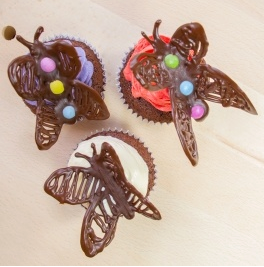
One of my Ecole Chocolate assignments is to create a unique chocolate recipe. So Madeline and I have been in the kitchen creating all sorts of concoctions; chocolate butterflies, transfer sheets, chocolate clay, fudge, and all sorts of other chocolate goodies.
With all of this cooking, shaping and molding of chocolate, I have come up with 6 Key Factors to consider when working with chocolate and I wanted to share that with you, our loyal readers.
6 Key Factors When Working with Chocolate
Key 1:
Ingredients: Your final product is only as good as the ingredients that are in it. ALWAYS use the best ingredients available. When making chocolate treats, this means buying chocolate with higher cocoa butter content.
Key 2:
Climate: 68 degrees is perfect for making and storing chocolate. If it’s too warm, your chocolate will melt. Needless to say Madeline and I have been living in a freezer since I’ve begun this class!
Key 3:
Altitude: Luckily, sea level is the ideal altitude for chocolate making. Since we live in Port Jefferson, NY, we're good there!
Key 4:
Moisture Level: This is a very, very important factor in chocolate making. It impacts tempering, which determines the shine and the shelf life of the final product. Keeping moisture levels down will yield a final product that you’re proud of!
Key 5:
Cooking time: Cooking time will be determined by the climate (temperature in your kitchen), altitude and moisture level. Knowing these factors before you begin will assist you in knowing how long to cook your chocolate.
Key 6:
Tender Loving Care Most importantly, the love and care that you put into your chocolate project will bring delight to others and a warm feeling in your heart.
So, next time you’re in the kitchen, attempting to make your Christmas chocolates, be sure to keep these factors in mind. Or better yet, head over to our website to experience delightful chocolates that have been lovingly prepared using the 6 Step Method above.
Whew! After working round the clock in preparation for the Chocology Unlimited Launch and then celebrating all weekend afterwards with our supporters, we were exhausted. And what do we at Chocology do when we’re exhausted? Head to the kitchen, of course!
One of my Ecole Chocolate assignments is to create a unique chocolate recipe. So Madeline and I have been in the kitchen creating all sorts of concoctions; chocolate butterflies, transfer sheets, chocolate clay, fudge, and all sorts of other chocolate goodies.
With all of this cooking, shaping and molding of chocolate, I have come up with 6 Key Factors to consider when working with chocolate and I wanted to share that with you, our loyal readers.
6 Key Factors When Working with Chocolate
Key 1:
Ingredients: Your final product is only as good as the ingredients that are in it. ALWAYS use the best ingredients available. When making chocolate treats, this means buying chocolate with higher cocoa butter content.
Key 2:
Climate: 68 degrees is perfect for making and storing chocolate. If it’s too warm, your chocolate will melt. Needless to say Madeline and I have been living in a freezer since I’ve begun this class!
Key 3:
Altitude: Luckily, sea level is the ideal altitude for chocolate making. Since we live in Port Jefferson, NY, we're good there!
Key 4:
Moisture Level: This is a very, very important factor in chocolate making. It impacts tempering, which determines the shine and the shelf life of the final product. Keeping moisture levels down will yield a final product that you’re proud of!
Key 5:
Cooking time: Cooking time will be determined by the climate (temperature in your kitchen), altitude and moisture level. Knowing these factors before you begin will assist you in knowing how long to cook your chocolate.
Key 6:
Tender Loving Care Most importantly, the love and care that you put into your chocolate project will bring delight to others and a warm feeling in your heart.
So, next time you’re in the kitchen, attempting to make your Christmas chocolates, be sure to keep these factors in mind. Or better yet, head over to our website to experience delightful chocolates that have been lovingly prepared using the 6 Step Method above.
