
 Have you ever run a marathon?
Sure you have! We all have. Remember that time you stayed up all night with your sick child? Or took 36 hours to give birth to a beautiful human being? What about that pesky project at work that seemed to go on forever? Or maybe you’ve run an actual 26.2 mile marathon like me.
A marathon in running terms is defined as a long-distance running race, strictly one of 26 miles and 385 yards (42.195 km).
A marathon in life is defined as a long-lasting or difficult task or operation of a specified kind: the last leg of an interview marathon that began this summer.
There’s a phrase in the runner’s world called “hitting the wall.” Hitting the wall in running terms means that you get to that point where you want to quit. It came for me at the 20-mile mark in my marathons. Although I had prepared and practiced for weeks leading up to my run, the 20-mile marker always got me.
It was at the 20-mile mark that it became a mental practice to push through to the end. It wasn’t about the activity of running anymore; it was about talking myself into finishing something I had started. The hard part was already completed. I succeeded in all three races, but the “wall” created self-doubt, telling me to stop before I finished my goal. The overwhelming desire to quit was there, but there were only 6.2 more miles to go. I had run 6 miles per day for many months. I knew I had it in me.
Starting a business is like running a marathon. There are so many moving parts and so much to do when planning a business. Just like in a running marathon, at first, energy is up and enthusiasm is high. For weeks here at Chocology, we have been planning, buying and situating everything from Agreements to UPS, so that we can deliver (pun intended) the best possible product to our customers. The launch of the actual business is upon us. But guess what? I hit the “wall” last week, my body and brain spent, and it felt impossible to go on.
I was frantically rushing from one appointment to another. As I was locking the front door to go pick Madeline up from her summer camp, I felt the lump in the pit of my stomach. I hadn’t deposited checks at the bank. I hadn’t bought groceries or even thought about dinner. My mind began to spiral into how hard it all was. How was I going to ship chocolate to my uncle in the Mojave Dessert without it melting, or to my cousin across the country in San Diego? Chocolate and heat don’t mix, unless of course, the chocolate is already in your mouth! I thought about the mountain of boxes that are piled everywhere in our home; UPS boxes, supply boxes, sample boxes, chocolate boxes. I had just finished an 11 hour day of photo shoots the day before and then received an email saying that my chocolatier class was starting Friday and not in two weeks like I had thought. I had hit the wall – and big time! I truly wondered how in the world I would go on.
But then it hit me! Wait a minute, Lin. You’ve been shipping boxes for years now; what’s the problem? It’s just a box. You can do this! Keep putting one foot in front of the other all the way to the finish line.
I realized I had experienced this same conversation with myself three times before during my marathons. I realized that this was just the “wall”. If I could get past the wall in my running marathons, than surely I could push past the wall I was experiencing in this business marathon. I had to realize that the “wall” was temporary. I had to become present with what was in front of me, affirm my accomplishments to this point and keep going. Yes, everything seemed to need doing all at once. But I could do it, one foot in front of the other. The hard part has already been done. And then snap! The wall was behind me.
I loved this quote about the “wall” from How Stuff Works:
Experience can also lessen the shock of hitting the wall. If you've been through it in training or previous races, you're less likely to succumb to it. As humbling and physically challenging as it can be, it is only temporary. That intrinsic knowledge alone can be enough to get you to the finish line and emerge from the shadow of the wall. ~ Kevin P. Allen, How Stuff Works
We are so close to the finish line. And at the finish line we get to celebrate with great customers, great chocolates and great chocolate adventures. I love people and look forward to the fun part of this business, working with people like you! Like the cheering teams on the sidelines at a marathon, we are grateful to have you cheering us on to the U.S. launch.
Here’s where we are in our race to the launch of Chocology:
Have you ever run a marathon?
Sure you have! We all have. Remember that time you stayed up all night with your sick child? Or took 36 hours to give birth to a beautiful human being? What about that pesky project at work that seemed to go on forever? Or maybe you’ve run an actual 26.2 mile marathon like me.
A marathon in running terms is defined as a long-distance running race, strictly one of 26 miles and 385 yards (42.195 km).
A marathon in life is defined as a long-lasting or difficult task or operation of a specified kind: the last leg of an interview marathon that began this summer.
There’s a phrase in the runner’s world called “hitting the wall.” Hitting the wall in running terms means that you get to that point where you want to quit. It came for me at the 20-mile mark in my marathons. Although I had prepared and practiced for weeks leading up to my run, the 20-mile marker always got me.
It was at the 20-mile mark that it became a mental practice to push through to the end. It wasn’t about the activity of running anymore; it was about talking myself into finishing something I had started. The hard part was already completed. I succeeded in all three races, but the “wall” created self-doubt, telling me to stop before I finished my goal. The overwhelming desire to quit was there, but there were only 6.2 more miles to go. I had run 6 miles per day for many months. I knew I had it in me.
Starting a business is like running a marathon. There are so many moving parts and so much to do when planning a business. Just like in a running marathon, at first, energy is up and enthusiasm is high. For weeks here at Chocology, we have been planning, buying and situating everything from Agreements to UPS, so that we can deliver (pun intended) the best possible product to our customers. The launch of the actual business is upon us. But guess what? I hit the “wall” last week, my body and brain spent, and it felt impossible to go on.
I was frantically rushing from one appointment to another. As I was locking the front door to go pick Madeline up from her summer camp, I felt the lump in the pit of my stomach. I hadn’t deposited checks at the bank. I hadn’t bought groceries or even thought about dinner. My mind began to spiral into how hard it all was. How was I going to ship chocolate to my uncle in the Mojave Dessert without it melting, or to my cousin across the country in San Diego? Chocolate and heat don’t mix, unless of course, the chocolate is already in your mouth! I thought about the mountain of boxes that are piled everywhere in our home; UPS boxes, supply boxes, sample boxes, chocolate boxes. I had just finished an 11 hour day of photo shoots the day before and then received an email saying that my chocolatier class was starting Friday and not in two weeks like I had thought. I had hit the wall – and big time! I truly wondered how in the world I would go on.
But then it hit me! Wait a minute, Lin. You’ve been shipping boxes for years now; what’s the problem? It’s just a box. You can do this! Keep putting one foot in front of the other all the way to the finish line.
I realized I had experienced this same conversation with myself three times before during my marathons. I realized that this was just the “wall”. If I could get past the wall in my running marathons, than surely I could push past the wall I was experiencing in this business marathon. I had to realize that the “wall” was temporary. I had to become present with what was in front of me, affirm my accomplishments to this point and keep going. Yes, everything seemed to need doing all at once. But I could do it, one foot in front of the other. The hard part has already been done. And then snap! The wall was behind me.
I loved this quote about the “wall” from How Stuff Works:
Experience can also lessen the shock of hitting the wall. If you've been through it in training or previous races, you're less likely to succumb to it. As humbling and physically challenging as it can be, it is only temporary. That intrinsic knowledge alone can be enough to get you to the finish line and emerge from the shadow of the wall. ~ Kevin P. Allen, How Stuff Works
We are so close to the finish line. And at the finish line we get to celebrate with great customers, great chocolates and great chocolate adventures. I love people and look forward to the fun part of this business, working with people like you! Like the cheering teams on the sidelines at a marathon, we are grateful to have you cheering us on to the U.S. launch.
Here’s where we are in our race to the launch of Chocology:
|
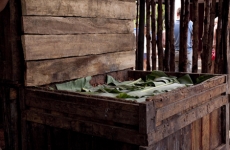 Either the fermenting house or the farmer ferments the cacao beans. This is an essential step as it affects the flavor of the chocolate it will produce.
Fermentation is performed for three reasons: to stop germination, to destroy the seed coat and to enhance flavor.
If the farmer has chosen to do this step, he will ferment the beans on a tarp in a field and cover them with banana leaves. He will stir the beans periodically until they go from a purple color to the dark reddish color of a fermented cacao bean.
The fermenting houses ferment the beans in wooden boxes for six to ten days. These wooden boxes have holes in the bottom where the juices can flow out. The beans are moved from box to box every two days until fully fermented.
Drying
Either the fermenting house or the farmer ferments the cacao beans. This is an essential step as it affects the flavor of the chocolate it will produce.
Fermentation is performed for three reasons: to stop germination, to destroy the seed coat and to enhance flavor.
If the farmer has chosen to do this step, he will ferment the beans on a tarp in a field and cover them with banana leaves. He will stir the beans periodically until they go from a purple color to the dark reddish color of a fermented cacao bean.
The fermenting houses ferment the beans in wooden boxes for six to ten days. These wooden boxes have holes in the bottom where the juices can flow out. The beans are moved from box to box every two days until fully fermented.
Drying
 After fermenting, the beans must be dried. The humidity of the beans must be lowered to 6% to 8%. They are often dried in the sun on tarps and raked often to promote even drying and prevent molding.
Drying houses may also be needed when the weather turns to rain or conditions are unfavorable for sun drying.
Drying can take up to a week, but care must be taken to dry the beans perfectly. Too little drying can create mold while too much drying can make the beans brittle.
When the beans are sufficiently dried, they are sorted. Beans that are flat, moldy, germinated or broken are removed. Only quality beans are stored. They can be stored in sacks for up to 5 years. They are now ready for shipping to the chocolate makers of the world.
The Processing and Manufacturing of Chocolate
Roasting and Winnowing
After fermenting, the beans must be dried. The humidity of the beans must be lowered to 6% to 8%. They are often dried in the sun on tarps and raked often to promote even drying and prevent molding.
Drying houses may also be needed when the weather turns to rain or conditions are unfavorable for sun drying.
Drying can take up to a week, but care must be taken to dry the beans perfectly. Too little drying can create mold while too much drying can make the beans brittle.
When the beans are sufficiently dried, they are sorted. Beans that are flat, moldy, germinated or broken are removed. Only quality beans are stored. They can be stored in sacks for up to 5 years. They are now ready for shipping to the chocolate makers of the world.
The Processing and Manufacturing of Chocolate
Roasting and Winnowing
 When the dried beans arrive at the manufacturing plant, the beans are roasted at different temperatures and for different lengths of time depending on the humidity, the desired taste and the size of the bean.
After roasting the beans are “winnowed” (cracked) to remove the outer shell, leaving only the nib, which is the essential ingredient for making chocolate.
Grinding
After roasting and winnowing, the nibs are ground into a paste called cocoa liquor. It is here that the cocoa liquor can be used either to produce chocolate bars or go through further processing to separate the fat from the solid. The fat is called cocoa butter and is used in many candies and beauty products. The solid is called cocoa press cake and can be used to make cocoa powder and hot cocoa products.
Conching
When the dried beans arrive at the manufacturing plant, the beans are roasted at different temperatures and for different lengths of time depending on the humidity, the desired taste and the size of the bean.
After roasting the beans are “winnowed” (cracked) to remove the outer shell, leaving only the nib, which is the essential ingredient for making chocolate.
Grinding
After roasting and winnowing, the nibs are ground into a paste called cocoa liquor. It is here that the cocoa liquor can be used either to produce chocolate bars or go through further processing to separate the fat from the solid. The fat is called cocoa butter and is used in many candies and beauty products. The solid is called cocoa press cake and can be used to make cocoa powder and hot cocoa products.
Conching
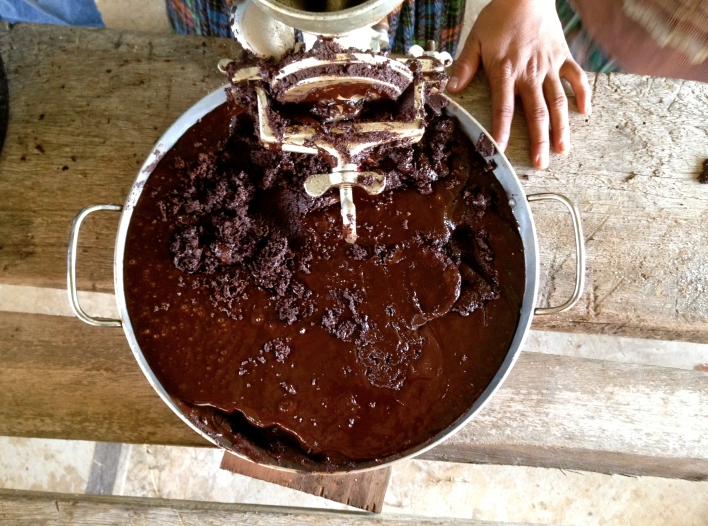 It is at this stage that the chocolate making can happen. The chocolate liquor is mixed with sugar, vanilla and milk (for milk chocolate). Conching is the process of mixing the ingredients for long periods of time to remove the acidity of the cocoa and develop flavor even further.
Some conching can take 24 to 72 hours, depending on the desired end product. The continuous mixing of ingredients creates incredibly smooth chocolate with balanced flavors, eliminating grainy or overpowering tastes.
Tempering and Molding
It is at this stage that the chocolate making can happen. The chocolate liquor is mixed with sugar, vanilla and milk (for milk chocolate). Conching is the process of mixing the ingredients for long periods of time to remove the acidity of the cocoa and develop flavor even further.
Some conching can take 24 to 72 hours, depending on the desired end product. The continuous mixing of ingredients creates incredibly smooth chocolate with balanced flavors, eliminating grainy or overpowering tastes.
Tempering and Molding
 The next step is to temper the chocolate. The chocolate is cooled and then warmed multiple times until it’s of the right consistency. This is the tricky part. If done correctly, tempering is what gives chocolate the smooth texture and snap when broken in two.
After the chocolate is tempered, it is ready for additional ingredients such as nuts, sea salt or coffee beans. It is then poured into molds and takes the shape of the confection that will be sold. Once the chocolate is cooled, it is removed, wrapped in its inner wrapper, labeled and placed on pallets for shipping to a store near you.
Quality Analysis
The next step is to temper the chocolate. The chocolate is cooled and then warmed multiple times until it’s of the right consistency. This is the tricky part. If done correctly, tempering is what gives chocolate the smooth texture and snap when broken in two.
After the chocolate is tempered, it is ready for additional ingredients such as nuts, sea salt or coffee beans. It is then poured into molds and takes the shape of the confection that will be sold. Once the chocolate is cooled, it is removed, wrapped in its inner wrapper, labeled and placed on pallets for shipping to a store near you.
Quality Analysis
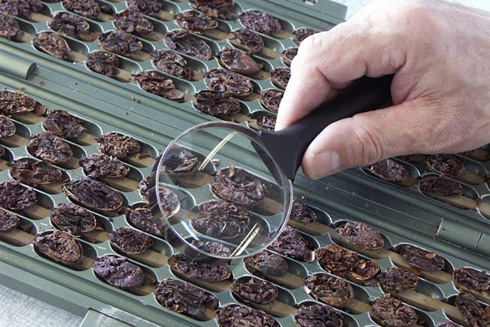 Many companies employ people who test the quality of the chocolate they are selling. These people undergo extensive sensory training. Often times they will test quality from one shipment to another to ensure consistency in the product. The testers then write descriptive analysis as to the aroma, flavors, and aftertastes of the chocolate they are testing.
At Chocology we are grateful for the community of people around the world who make eating chocolate possible. The commitment and craftsmanship that goes into just one chocolate bar is quite astounding. Makes us want to appreciate it just a little bit more.
Many companies employ people who test the quality of the chocolate they are selling. These people undergo extensive sensory training. Often times they will test quality from one shipment to another to ensure consistency in the product. The testers then write descriptive analysis as to the aroma, flavors, and aftertastes of the chocolate they are testing.
At Chocology we are grateful for the community of people around the world who make eating chocolate possible. The commitment and craftsmanship that goes into just one chocolate bar is quite astounding. Makes us want to appreciate it just a little bit more.
 In the western world, chocolate is everywhere - the local corner store, the big box chains, on the Internet and of course in small boutique chocolate shops. We eat chocolate to be happy, to be healthy and to celebrate our lives. Our demand for chocolate is evident, but have you ever wondered how a small hard bean turns into a silky smooth chocolate bar?
Collaborative efforts of many people and many countries are imperative when transforming bean to bar. From third world growers to western manufacturers, every step impacts the quality of the chocolate we eat. Chocolate means different things to different people. Artful attention to detail and a commitment to craftsmanship are vitally important every step of the way.
Cacao is valued worldwide as a trade commodity, local food and manufacturing product. For the next two weeks, let's explore, from the ground up, how chocolate is made - from bean to bar. It might inspire you to appreciate your chocolate just a little bit more.
In the western world, chocolate is everywhere - the local corner store, the big box chains, on the Internet and of course in small boutique chocolate shops. We eat chocolate to be happy, to be healthy and to celebrate our lives. Our demand for chocolate is evident, but have you ever wondered how a small hard bean turns into a silky smooth chocolate bar?
Collaborative efforts of many people and many countries are imperative when transforming bean to bar. From third world growers to western manufacturers, every step impacts the quality of the chocolate we eat. Chocolate means different things to different people. Artful attention to detail and a commitment to craftsmanship are vitally important every step of the way.
Cacao is valued worldwide as a trade commodity, local food and manufacturing product. For the next two weeks, let's explore, from the ground up, how chocolate is made - from bean to bar. It might inspire you to appreciate your chocolate just a little bit more.
The Harvest
Growing the Cacao Tree
 Chocolate begins in the field, not the factory. Growing a healthy, vibrant tree is the first step in making quality chocolate.
The cacao tree originated in Central America but now grows in many areas of West Africa, Asia, Malaysia and Indonesia. There are about 2 to 2.5 million producers worldwide, 90% being small-scale farmers with 12 acres or less. Cacao trees thrive in these areas because of their humid tropical climates with regular rains and short dry seasons.
The trees can produce pods year round for 25 to 30 years. Thousands of flowers grow from the tree’s trunk each year but only about 1% will bear fruit called pods. The pod is of similar size and shape to a football and grows from the trunk or limbs of the tree. It takes five to six months for the fruit to ripen. Pods can grow in a range of colors: brown, orange, red, green and yellow.
Many modern day chocolatiers are working diligently to empower the farmers of the cacao tree by trading fairly, paying above market value and assisting with better working conditions. This helps both the farmer and the manufacturer to produce higher quality chocolate while encouraging more humane and fair practices.
Harvesting the Pods
 Once the pods are ripe, they are harvested by cutting the stalk with a machete or long sharp pruning loppers. This is done with great care, as the stalk must be preserved for further pod production. If the stalk is damaged, that area of the tree becomes infertile and will no longer produce the flower or the pod. Pods can be harvested year round but are usually harvested every six months, coinciding with the rainy seasons.
Removing the Cacao Beans
 Once on the ground, the pods are sorted by quality and placed in piles. In many areas this is a social affair, where stories, news and jokes are shared as everyone works. Skilled craftsmen will open the pods with a machete, with just enough pressure to open the pod but not damage the beans inside. The beans are heaped upon large leaves, usually banana leaves. The group socializes as they watch the fruits of their labor pile up.
The empty hulls are gathered and placed in the sun to rot. This will later be used as compost for nourishing the next crop.
Some farmers take their crop to fermenting houses, selling their beans by weight. For these farmers, it’s the end of the road. Others choose to ferment the beans themselves. Whether the fermentation happens on the farm or at the fermenting house, the harvesting has now ended and the beans move forward for further processing.
Many of the farmers who produce the cacao have never tasted a chocolate bar. The cacao trees are a source of community, spirit and livelihood among the farmers and their commitment to growing a quality product touches the world. Without the farmer, there would be no chocolate. Join us next week as we follow the next phases of the chocolate journey. At Chocology, research is one of our top priorities. Since we want to learn all there is to know about chocolate and pass that knowledge on to you, we’re always on the lookout for new chocolate covered theories.
We recently heard that chocolate might play a role in helping people achieve higher levels of productivity. Well. . . at the very least, it might make people happier and then stimulate more productivity.
In any case, a study organized by three university researchers, Andrew J. Oswald, Eugenio Proto, and Daniel Sgroi, set out to prove that happy people are more productive. You can find a full version of their paper entitled “Happiness and Productivity” here.
You’re welcome to read the full report, but basically the trio compiled four control groups to study whether happiness had an effect on productivity. Two groups were shown funny comedian clips, one group was given free fruit, chocolate and drinks and the fourth group was asked to talk about a recent tragedy in their personal lives.
All of the groups were then asked to complete standardize math quizzes to determine if the comedy or food improved their productivity in these tasks. The three groups that were given incentives did much better on the quizzes while the control group that talked about their misfortunes did worse. In fact, the happy producing incentives raised productivity by an average of 12%.
Google is probably the most well known company to offer an array of workplace perks. It has been voted the best company to work for by Fortune.com for the last five years and productivity at Google has increased by 37% since these perks have been implemented.
The driving force seems to be that the happier people are, the more productive they are.
So, how does this relate specifically to chocolate? Well, at Chocology we believe that chocolate does raise happiness levels. We know scientifically that it activates the pleasure centers in our brain. History tells us that people through the ages have consumed it for it’s medicinal and mood elevating properties. In only stands to reason that if we eat chocolate, we become just a little bit happier, at least for the moments that we’re eating it.
If the study by Oswald, Proto and Sgroi is accurate, then consuming chocolate should increase our productivity! It might be a stretch, but it’s a stretch we’re willing to make. Chocolate won’t hurt you and it just might make you happier and more productive. It’s certainly worth a try!
How about you? Do you think chocolate increases happiness? Could happiness increases productivity? Have you seen incidents in which happiness increased productivity in your life? Comment here or join us on Facebook and let us know what you think.
Since we’re talking about research, what kinds of things would you like to know about chocolate? Give us some ideas and we may choose it as one of our research projects for a future blog post.
At Chocology, research is one of our top priorities. Since we want to learn all there is to know about chocolate and pass that knowledge on to you, we’re always on the lookout for new chocolate covered theories.
We recently heard that chocolate might play a role in helping people achieve higher levels of productivity. Well. . . at the very least, it might make people happier and then stimulate more productivity.
In any case, a study organized by three university researchers, Andrew J. Oswald, Eugenio Proto, and Daniel Sgroi, set out to prove that happy people are more productive. You can find a full version of their paper entitled “Happiness and Productivity” here.
You’re welcome to read the full report, but basically the trio compiled four control groups to study whether happiness had an effect on productivity. Two groups were shown funny comedian clips, one group was given free fruit, chocolate and drinks and the fourth group was asked to talk about a recent tragedy in their personal lives.
All of the groups were then asked to complete standardize math quizzes to determine if the comedy or food improved their productivity in these tasks. The three groups that were given incentives did much better on the quizzes while the control group that talked about their misfortunes did worse. In fact, the happy producing incentives raised productivity by an average of 12%.
Google is probably the most well known company to offer an array of workplace perks. It has been voted the best company to work for by Fortune.com for the last five years and productivity at Google has increased by 37% since these perks have been implemented.
The driving force seems to be that the happier people are, the more productive they are.
So, how does this relate specifically to chocolate? Well, at Chocology we believe that chocolate does raise happiness levels. We know scientifically that it activates the pleasure centers in our brain. History tells us that people through the ages have consumed it for it’s medicinal and mood elevating properties. In only stands to reason that if we eat chocolate, we become just a little bit happier, at least for the moments that we’re eating it.
If the study by Oswald, Proto and Sgroi is accurate, then consuming chocolate should increase our productivity! It might be a stretch, but it’s a stretch we’re willing to make. Chocolate won’t hurt you and it just might make you happier and more productive. It’s certainly worth a try!
How about you? Do you think chocolate increases happiness? Could happiness increases productivity? Have you seen incidents in which happiness increased productivity in your life? Comment here or join us on Facebook and let us know what you think.
Since we’re talking about research, what kinds of things would you like to know about chocolate? Give us some ideas and we may choose it as one of our research projects for a future blog post.
 It’s so much fun to learn about new and exciting things! We at Chocology love learning, especially when it comes to learning more about chocolate.
What have you learned about chocolate?
To celebrate all that we’ve learned so far, we’d like to invite you to test your knowledge. Hint: check out past blog posts to confirm your answers.
It’s so much fun to learn about new and exciting things! We at Chocology love learning, especially when it comes to learning more about chocolate.
What have you learned about chocolate?
To celebrate all that we’ve learned so far, we’d like to invite you to test your knowledge. Hint: check out past blog posts to confirm your answers.
TEST YOUR KNOWLEDGE -with our self grading test
| What are three of the health benefits of eating chocolate? |
| Fill in the blank: Scientific research has shown that the higher the ___________percentage, the healthier the chocolate. |
| How does mindfully tasting chocolate expand our appreciation of it? |
| Based on the poll Chocology did two weeks ago, what types of chocolate were most desirable? Suggestion: check our Facebook page at https://www.facebook.com/Chocology?fref=nf |
| Where do we get our knowledge about how cacao was first used? |
| How did the chocolate press revolutionize the way we use cacao? |
We would love to know how you did! Leave us a comment or head on over to Facebook and share what you know. Maybe you know something that we don’t. Give us a tip and it could be a featured topic on one of our upcoming Chocology blog posts.
 At Chocology, we are interested in all aspects of chocolate, including reasons why we want to and should eat it. Spawned by an article in the Huffington Post, “17 Reasons You Should Eat Chocolate Every Day” we went on a search to prove why we really should eat chocolate every day.
Who doesn’t love chocolate? It’s rich, luscious taste and consistency has enamored young and old alike for centuries. We all feel a little guilty when we eat it, don’t we? But what if indulging in chocolate is not as bad as we originally thought? In fact, what if it actually saves lives?
In recent years, the study of the effects of cacao on the human body has increased at Universities around the world. A publication from The Center for Flavonoid Research suggests that eating cacao daily provides many health benefits including the healing of certain chronic ailments. Another article published by Dr. Bret S. Stetka at Medscape.com also suggests benefits of eating chocolate and even offers amounts that should be consumed daily to attain these benefits.
So what are the benefits? Here are just five benefits of eating quality chocolate on a daily basis.
At Chocology, we are interested in all aspects of chocolate, including reasons why we want to and should eat it. Spawned by an article in the Huffington Post, “17 Reasons You Should Eat Chocolate Every Day” we went on a search to prove why we really should eat chocolate every day.
Who doesn’t love chocolate? It’s rich, luscious taste and consistency has enamored young and old alike for centuries. We all feel a little guilty when we eat it, don’t we? But what if indulging in chocolate is not as bad as we originally thought? In fact, what if it actually saves lives?
In recent years, the study of the effects of cacao on the human body has increased at Universities around the world. A publication from The Center for Flavonoid Research suggests that eating cacao daily provides many health benefits including the healing of certain chronic ailments. Another article published by Dr. Bret S. Stetka at Medscape.com also suggests benefits of eating chocolate and even offers amounts that should be consumed daily to attain these benefits.
So what are the benefits? Here are just five benefits of eating quality chocolate on a daily basis.

 Meet Natalie
-This morning we met with Natalie who was flying in from Cape Town—bless her heart after flying for 22 hours on Easter morning she still wanted to take her time to meet with us. Natalie will be bringing in new business with Chocology. Natalie was magical as David’s PA here in England. She would always believe that something is possible and somehow she made it so. I love her positive attitude and trust our new clients couldn’t be in better hands.
Our final destination of this trip is the London Eye! Madeline and I had the most lovely afternoon tea, the staff was charming and we were in the center of absolutely everything. After our hour ride we stolled along the River Thames and enjoyed the street fair (in the rain) and indulged in the sites and smells of the rich indian foods and the diversity of people only to be found in London. It’s no wonder Madeline wants to move back here.
Happy travels,
Linda and Madeline
Meet Natalie
-This morning we met with Natalie who was flying in from Cape Town—bless her heart after flying for 22 hours on Easter morning she still wanted to take her time to meet with us. Natalie will be bringing in new business with Chocology. Natalie was magical as David’s PA here in England. She would always believe that something is possible and somehow she made it so. I love her positive attitude and trust our new clients couldn’t be in better hands.
Our final destination of this trip is the London Eye! Madeline and I had the most lovely afternoon tea, the staff was charming and we were in the center of absolutely everything. After our hour ride we stolled along the River Thames and enjoyed the street fair (in the rain) and indulged in the sites and smells of the rich indian foods and the diversity of people only to be found in London. It’s no wonder Madeline wants to move back here.
Happy travels,
Linda and Madeline
 London Chocolate Tour
We are staying out by the airport for the duration of our trip so that tomorrow morning we can meet an old friend and possible Chocology team member out at Terminal 3 at 10am.
Yes, today is once again back to work—we must indulge again in more chocolate. We engaged in secret shopping in order to check out some of the competition. Madeline even drew some images of the competitors products on the iPad!
London Chocolate Tour
We are staying out by the airport for the duration of our trip so that tomorrow morning we can meet an old friend and possible Chocology team member out at Terminal 3 at 10am.
Yes, today is once again back to work—we must indulge again in more chocolate. We engaged in secret shopping in order to check out some of the competition. Madeline even drew some images of the competitors products on the iPad!
 Yes, I know our products and how we wish to service our customers but I also want to know what our customers are doing. I don’t want to miss anything. When I was an Inn Keeper in Maine I was sure to sleep (and shower) in every room just so I would know how each guest might experience their room.
As we were entering the tube station Madeline said to me “Mama why do you always tell me where we are going—every little detail?” I stopped, then asked her to close her eyes and then I turned her around a couple of times to disorient her and then started dragging her along with me. She looked at me with a big question mark on her face and I explained to her how Knowledge is Power and don’t you feel more in control when you know where you’re going and what’s coming next? She said “yes” and then I had her get us into Leicester Square. Now she knows her way around the London tubes like a local.
Happy travels,
Linda and Madeline
Yes, I know our products and how we wish to service our customers but I also want to know what our customers are doing. I don’t want to miss anything. When I was an Inn Keeper in Maine I was sure to sleep (and shower) in every room just so I would know how each guest might experience their room.
As we were entering the tube station Madeline said to me “Mama why do you always tell me where we are going—every little detail?” I stopped, then asked her to close her eyes and then I turned her around a couple of times to disorient her and then started dragging her along with me. She looked at me with a big question mark on her face and I explained to her how Knowledge is Power and don’t you feel more in control when you know where you’re going and what’s coming next? She said “yes” and then I had her get us into Leicester Square. Now she knows her way around the London tubes like a local.
Happy travels,
Linda and Madeline
 London to Bath to Glastonbury
-After breakfast we took the tube to the train to meet our dear friend Michelle and her family. We met Michelle and her family when we moved to Port Jefferson, New York 8 years ago and Madeline went to school with her boys. Sadly (for me) in October they moved home to England to be nearer Michelle’s mum. But now it appears to be a positive as Michelle will be packaging and shipping our Chocology orders here in UK! I love that we are all connected as coworkers AND as people. Life is good!
When I mentioned to Michelle how much we love Indian food, her husband Joe whipped together a lovely Indian meal and we all enjoyed catching up and making Chocology plans. It felt so good to be in a home and with good friends.
London to Bath to Glastonbury
-After breakfast we took the tube to the train to meet our dear friend Michelle and her family. We met Michelle and her family when we moved to Port Jefferson, New York 8 years ago and Madeline went to school with her boys. Sadly (for me) in October they moved home to England to be nearer Michelle’s mum. But now it appears to be a positive as Michelle will be packaging and shipping our Chocology orders here in UK! I love that we are all connected as coworkers AND as people. Life is good!
When I mentioned to Michelle how much we love Indian food, her husband Joe whipped together a lovely Indian meal and we all enjoyed catching up and making Chocology plans. It felt so good to be in a home and with good friends.
 Madeline and the chaps stayed up playing games until midnight! It was so cute in the morning when they all said staying up late was great fun but “it wasn’t worth it in the morning.”
Happy travels,
Linda and Madeline
Madeline and the chaps stayed up playing games until midnight! It was so cute in the morning when they all said staying up late was great fun but “it wasn’t worth it in the morning.”
Happy travels,
Linda and Madeline
 -When we lived here the first thing I would do when anyone from America came over to visit was send them on the Big Bus Tour—which is exactly what I wanted for Madeline to do. It’s a great way to get your sense of direction and at the very least get to see the sites of London. Madeline loved spending the entire day sitting on the top of the double decker bus seeing all of London’s famous landmarks!
 I’d have to say Tower bridge was probably Madeline’s favorite.. and I’m confident that’s because for her 10th birthday we had a big ‘ol Lego party and the final mystery build was 18 kids building the 4,287 pieces Tower Bridge. It’s still sits proudly in my office at home.
Pretty much as soon as I moved over to London I learned the best Indian food comes out of London and guess what? Marriott Regents Park restaurant features Indian food and Chef Ali's Chicken Tika Masala was out of this world. Oh it was good to just take a day off and enjoy a fabulous dinner at the hotel and then sleep like rocks.
Happy Travels,
Linda and Madeline
p.s. Madeline absolutely love, love, loves London. She says "The people are so refined, and helpful and the city is busy and quiet at the same time". She also loves how the people respect history. She'd move here in a heartbeat.
I’d have to say Tower bridge was probably Madeline’s favorite.. and I’m confident that’s because for her 10th birthday we had a big ‘ol Lego party and the final mystery build was 18 kids building the 4,287 pieces Tower Bridge. It’s still sits proudly in my office at home.
Pretty much as soon as I moved over to London I learned the best Indian food comes out of London and guess what? Marriott Regents Park restaurant features Indian food and Chef Ali's Chicken Tika Masala was out of this world. Oh it was good to just take a day off and enjoy a fabulous dinner at the hotel and then sleep like rocks.
Happy Travels,
Linda and Madeline
p.s. Madeline absolutely love, love, loves London. She says "The people are so refined, and helpful and the city is busy and quiet at the same time". She also loves how the people respect history. She'd move here in a heartbeat.
 Our First day in London
-First thing this morning I met with our web designer, Denise. I’m so happy she’s going to stay on and work with us as well as take on the responsibility of the Chocology Unlimited site. She’s so positive; she didn’t even flinch when I asked her to be sure the website looks good not only on a desktop but on the iPads and Smartphones as well…
After a lovely breakfast, we were frustrated because we STILL couldn’t get Madeline’s wifi working. The hotel staff as well as their tech department couldn’t get it working and then Madeline said “Ethernet Cable!” and all was well with the world. Just a short taxi ride over to St John's Wood High Street we picked up a British phone and sent some chocolate home to some of Madeline’s friends. Then we went immediately over to the Apple store on Regents Street. As always, they were just as impressive as the other Apple stores and spent an hour explaining the differences between US and UK network access.
Later we enjoyed a scrumptious dinner at Fortnum & Mason and were very happy to be able to read the menu. Back in the hotel that evening, Madeline created a business flow chart of how our Chocology orders will flow. It was very easy to understand. Her diagrams, illustrations and logical sequence process was spot on! I love the way she thinks!
Happy Travels,
Linda and Madeline
p.s. Any questions? Drop us a line at: info@chocology.uk.co or email me at linda@chocology.co.uk
Our First day in London
-First thing this morning I met with our web designer, Denise. I’m so happy she’s going to stay on and work with us as well as take on the responsibility of the Chocology Unlimited site. She’s so positive; she didn’t even flinch when I asked her to be sure the website looks good not only on a desktop but on the iPads and Smartphones as well…
After a lovely breakfast, we were frustrated because we STILL couldn’t get Madeline’s wifi working. The hotel staff as well as their tech department couldn’t get it working and then Madeline said “Ethernet Cable!” and all was well with the world. Just a short taxi ride over to St John's Wood High Street we picked up a British phone and sent some chocolate home to some of Madeline’s friends. Then we went immediately over to the Apple store on Regents Street. As always, they were just as impressive as the other Apple stores and spent an hour explaining the differences between US and UK network access.
Later we enjoyed a scrumptious dinner at Fortnum & Mason and were very happy to be able to read the menu. Back in the hotel that evening, Madeline created a business flow chart of how our Chocology orders will flow. It was very easy to understand. Her diagrams, illustrations and logical sequence process was spot on! I love the way she thinks!
Happy Travels,
Linda and Madeline
p.s. Any questions? Drop us a line at: info@chocology.uk.co or email me at linda@chocology.co.uk